
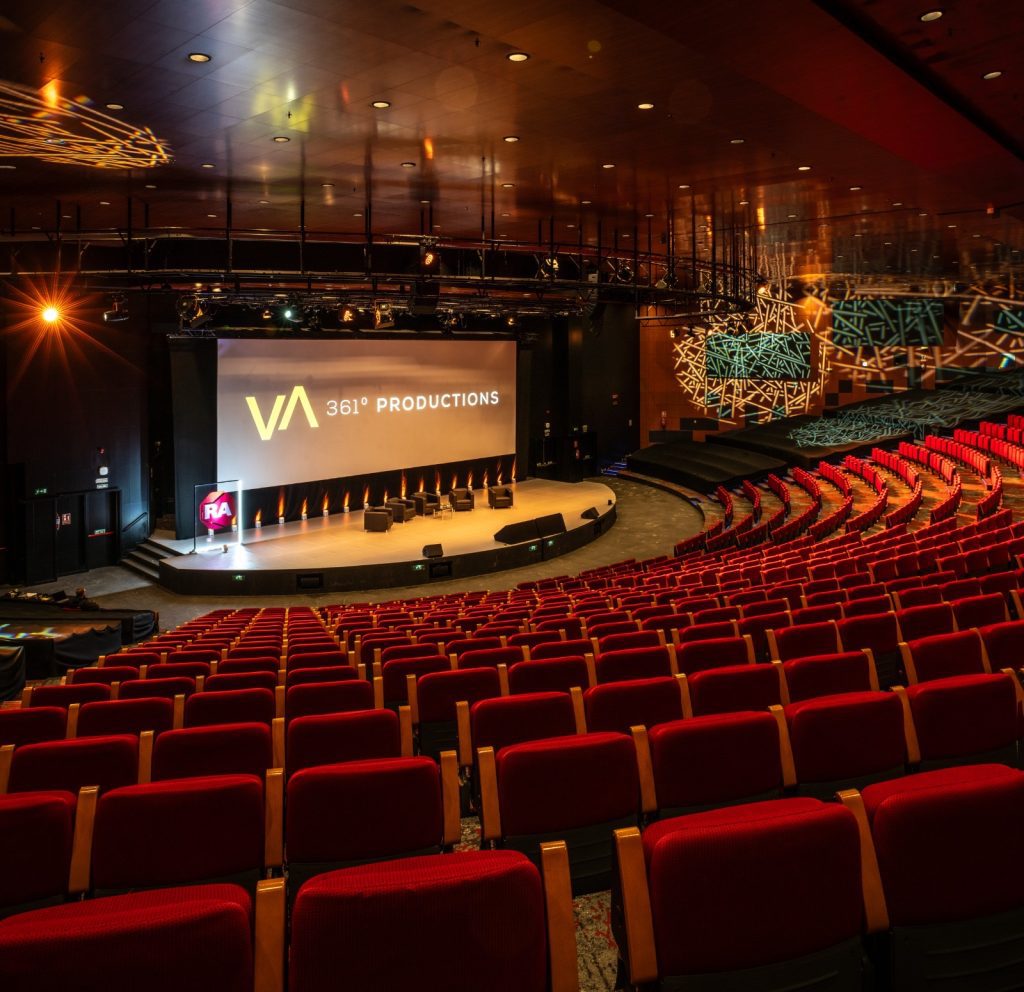
When discussing the technical production of a corporate event, attention often focuses on visual
elements such as LED screens, digital scenography, or lighting. However, there is one factor that
directly shapes the audience’s experience and the effectiveness of the message: sound.
In a corporate environment, where the main objective is to communicate ideas, present projects, or
share a strategic vision, audio clarity becomes essential. A well-designed sound system not only
ensures that every attendee can hear clearly, but also contributes to creating a professional, seamless
experience aligned with the brand’s image.
By contrast, poor sound quality can affect the overall perception of the event, even when every other
technical element is working perfectly.
Sound as a communication tool
In a corporate event, content is at the core of the experience. Conferences, presentations, panel
discussions, or executive speeches rely entirely on the audience’s ability to hear clearly.
If the message is not transmitted properly, audience attention quickly fades and the overall experience
suffers. Issues such as poorly adjusted microphones, inconsistent volume levels, or areas of the room
with weak sound coverage can make it difficult for attendees to follow the content and remain
engaged.
For this reason, sound should not be seen solely as a technical component, but as an essential tool
for effective communication.
Acoustic challenges in event spaces
Every venue presents different acoustic characteristics. Auditoriums, hotels, convention centers, or
industrial spaces adapted for events can all create specific challenges that must be analyzed in
advance.
Factors such as ceiling height, wall materials, audience distribution, or reflective surfaces directly
influence how sound behaves within a room.
Without proper assessment, issues such as excessive reverberation, echo, or uneven sound
coverage can occur. For this reason, the sound system must always be designed according to the
specific characteristics of the venue.
Technical design of the sound system
To ensure an optimal listening experience, the sound system must be carefully planned before the
event. This process involves analyzing several technical elements that determine the final
configuration of the system.
Key factors include the size of the space, the number of attendees, the type of presentations planned,
and the layout of the stage and audience.
Based on this analysis, the placement of speakers, the type of microphones required, and the overall
system configuration are defined to guarantee consistent sound coverage throughout the room. Theobjective is simple: every attendee, regardless of where they are seated, should hear the message
with the same level of clarity.
Technical testing and pre-event adjustments
Before the event begins, comprehensive technical testing is essential. These tests allow the technical
team to verify that every element of the system is functioning properly and to make the necessary
adjustments to ensure stable sound throughout the event.
During this stage, aspects such as audio levels, interaction between different sound sources,
microphone performance, and room coverage are carefully reviewed.
These checks are crucial to anticipate potential issues and ensure the system performs reliably under
real conditions.
Sound as part of the brand experience
In corporate events, every technical element contributes to shaping brand perception. Clear,
balanced, and stable sound communicates professionalism, precision, and attention to detail.
On the other hand, poor audio quality can create distractions, make the message harder to
understand, and negatively affect the overall perception of the event.
For this reason, sound should always be considered an integral part of the technical design and of the
experience delivered to the audience.
When sound works, the message connects
In many cases, the audience is unaware of the technical work behind a well-designed sound system.
And that is precisely its success: when everything works naturally, the technology fades into the
background and the message becomes the true focus.
In corporate event production, sound does more than support the experience. It is what allows every
word to be heard clearly and ensures that the message truly connects with the audience.
