
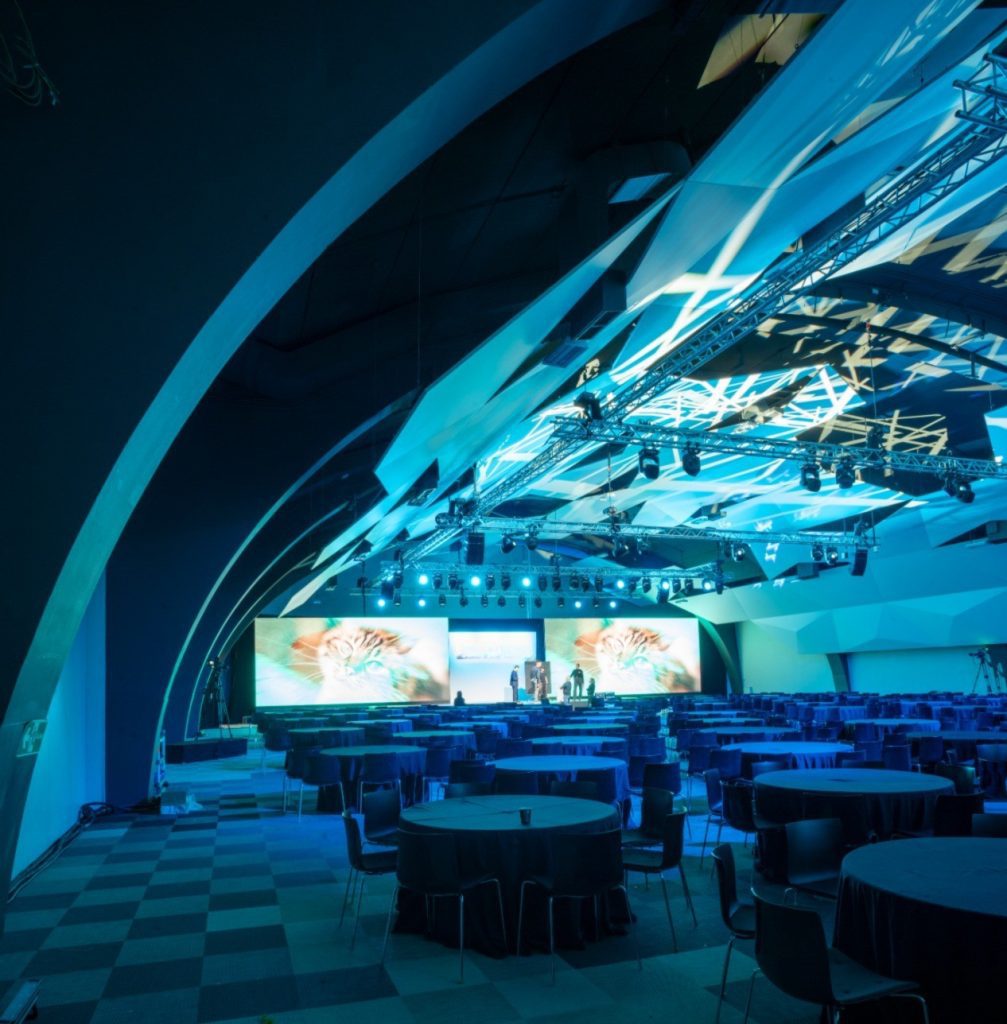
When a corporate event begins and everything flows seamlessly, it is never a coincidence.
It is the result of precise technical planning and meticulous behind-the-scenes execution.
These are the essential steps that cannot be overlooked to ensure everything performs exactly as designed.
1. Pre-Event Venue Analysis
Before discussing screens or digital scenography, the environment must be carefully assessed:
● Actual room dimensions
● Ceiling height and rigging points
● Audience viewing distances
● Natural and artificial lighting conditions
A miscalculation at this stage can directly impact visibility and overall visual impact.
2. Technical Design & Digital Scenography
Once the analysis is complete, the technical structure is defined:
● LED screen size and format
● Required resolution based on viewing distance
● Visual element distribution
● Integration with sound and lighting systems
This is where the visual architecture of the event is built.
It is not about placing a screen, but about designing a coherent environment aligned with the brand and its message.
3. Content Planning & Adaptation
Before installation, all content must be reviewed and adjusted:
● Video formats and resolutions
● Presentation ratios
● Animations and transitions
● Compatibility with playback systems
Many technical issues arise from content that is not properly adapted to the display system.
4. Structural & Technical Installation
During setup, planning becomes execution:
● Structure installation
● Modular LED screen assembly
● Cable management and signal routing
● Video processor configuration
Every connection must be verified.
Every system must be prepared to operate with full stability.
5. Comprehensive Technical Testing
This is one of the most critical stages.
Testing includes:
● Main signal and backup systems
● Brightness and color calibration
● Image synchronization
● Live source switching
The objective is simple: eliminate any room for improvisation.
In corporate environments, reliability is part of the experience.
6. Coordination with Production Teams
An event functions as a complete ecosystem.
The technical setup must align with:
● Event production
● Stage direction
● Content teams
● Lighting and sound providers
Clear communication ensures efficiency and prevents last-minute issues.
7. Live Technical Supervision
During the event, monitoring is continuous:
● Signal supervision
● Real-time adjustments
● Managing unexpected changes
● Ensuring system stability
Control must be maintained from the first moment to the final cue.
8. Post-Event Evaluation
After the event concludes:
● Technical performance is reviewed
● Improvements are documented
● Generated audiovisual material is assessed
This ensures continuous optimization and long-term improvement.
Where Success Truly Begins
When the audience takes their seats and everything works with precision, it is not luck.
It is the result of a structured process designed to minimize risk and maximize impact.
In corporate event production, what happens behind the scenes is what truly sustains the experience.
Because when the event begins, everything must perform exactly as designed.
