
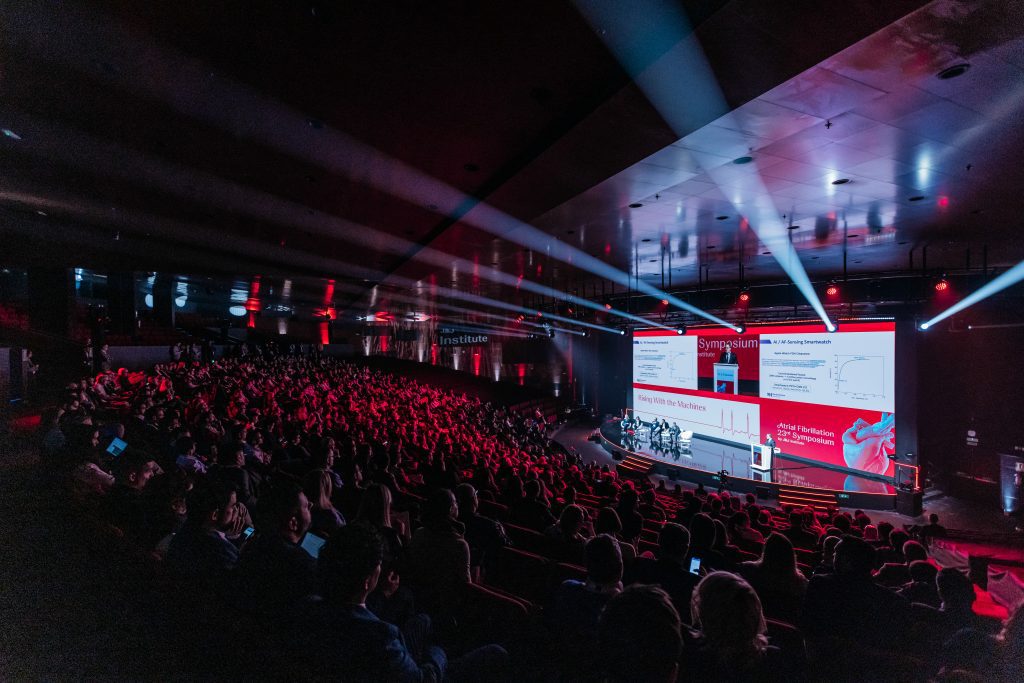
Organizing a successful event does not depend only on the venue, the catering or the guest list. One of the most decisive elements for the impact and professionalism of any event is the audiovisual production. Whether it's a corporate conference, a wedding, a concert or a product launch, the audiovisual component can make the difference between a memorable event and a forgettable one.
However, the costs associated with audiovisual production can often seem daunting. Fortunately, there are effective strategies to maximize the audiovisual budget without sacrificing quality. In this article, we share professional tips, practical examples and best practices to achieve an impactful and profitable audiovisual execution.
1. Early planning: the key to success
Good planning is the foundation of any successful event, and when it comes to audiovisuals, anticipating makes all the difference. Including the audiovisual supplier from the beginning helps to align expectations, budgets and technical needs from the start.
Including the audiovisual team early in the organizational process can make a big difference in the use of the budget. Early planning not only allows you to save money, but also to avoid common mistakes.
Benefits of planning ahead:
Better price negotiation: Audiovisual production companies often offer preferential rates for advance bookings.
Availability of equipment and technicians: You ensure access to state-of-the-art technology and trained professionals.
You avoid last minute expenses: Urgent requests are usually more expensive and less efficient.
Practical example: If you are planning an annual conference in September, starting to talk to AV vendors as early as March or April will allow you to get competitive quotes and evaluate alternatives early.
2. Define clear objectives for audiovisual use
Knowing exactly what you want to communicate and how you want to do it will help you prioritize resources and optimize each audiovisual component. Clarity in your objectives allows you to invest intelligently, without leaving loose ends.
Before talking to any supplier, it is essential to be clear about what you want to achieve with audiovisual production. This allows a focused investment without wasting resources.
Questions to answer:
What type of content will be presented (videos, presentations, panels, live performances)?
How many people will attend in person and/or virtually?
What are the key points to highlight on screen or sound?
3. Choose an audiovisual supplier with proven experience
The audiovisual supplier is a strategic partner of the event. Choosing one with experience and proven track record will give you security, confidence and the peace of mind of knowing that the technical aspects will be well covered.
Not all suppliers offer the same level of professionalism. Choosing one with relevant experience is vital to ensure flawless and smooth execution.
What to evaluate in a supplier:
Portfolio of previous works
Customer reviews and references
Ability to adapt to unforeseen events
Trained and flexible technical staff
4. Take advantage of modular audiovisual solutions
Not all events require the same technical deployment. Modular solutions allow you to adapt to the specific needs of the moment, without compromising quality or overburdening the budget.
Choose modular systems that you can adapt to the growth or reduction of your event's needs. This allows you to scale your investment as your planning evolves.
Example of modular solutions:
Basic stage + LED screens + sound system: Perfect for lectures or presentations.
Streaming package + HD recording + wireless microphones: Ideal for hybrid events.
Video mapping kit + intelligent lights: Designed for events looking for a visual “wow” effect.
5. Opt for the right technology, not the most expensive one.
It is a common misconception that the most expensive is always the best. In audiovisual production, the important thing is to use equipment and solutions that fit the size, objective and audience of your event.
Investing in the right technology does not always mean going for the latest or most expensive. Knowing what best suits your goals is essential to spending wisely.
Recommendations:
Prioritize sound quality over quantity of loudspeakers.
Use medium LED displays well located instead of a much more expensive giant one.
Choose semi-professional cameras for internal recording or social networking.
Practical example: For an event with 150 people, a well-calibrated compact sound system and two 2×2 meter LED screens can be more effective than a central mega screen.
6. Reduce costs with creativity: content and ambience
When budget is tight, creativity becomes your best ally. There are many ways to generate visual impact without large investments, taking advantage of the content and ambience with ingenuity.
A good idea can be worth more than expensive equipment. Using creativity in the generation of content and ambience can save you a considerable sum.
Ideas to inspire you:
Projections for decoration: Instead of much more expensive physical elements, use projections or mapping to set the mood of the space.
Pre-recorded content: Record video messages from speakers who are unable to attend in person.
Automatic summary videos: Generate post-event clips that you can use for future promotion.
7. Unify suppliers whenever possible
Less is more when it comes to logistics coordination. Working with a single end-to-end supplier can facilitate execution, reduce errors and generate synergies that also translate into savings.
Coordinating with multiple vendors can increase the risk of failure and logistical costs. Hiring a company that offers all integrated audiovisual services is often the best decision.
Advantages of a one-stop supplier:
Better technical integration
Reduced assembly and disassembly times
Reduced risk of synchronization errors
8. Performs technical tests and trials
Flawless execution is achieved with preparation. Technical testing and rehearsals are essential to ensure that everything works properly during the event, and to resolve any problems before they occur.
Technical errors can cost much more than anticipated. Be sure to test all systems in advance and have staff ready to respond to any eventuality.
Best practices:
Agenda at least one dress rehearsal the day before the event.
Verify the presentation compatibility and videos with the equipment.
Have a plan B for each key component: power, internet, microphones.
9. Consider the recording and reuse of content
Your event doesn't have to be ephemeral. Take advantage of the occasion to generate audiovisual material that you can reuse and amplify on multiple channels after the event, thus multiplying the return on investment.
Recording your event not only provides immediate value, but also generates materials that you can later use for training, marketing or sales.
Ideas for reusing content:
Create summaries for social networks or websites.
Generate internal training videos.
Use recorded segments to promotion of future events.
10. Evaluate the impact and learn for the future.
After each event, it is important to reflect and gather lessons learned. This not only helps to measure results, but also to improve and optimize budgets in future editions.
A fundamental part of saving is learning from each experience. Evaluating what worked and what didn't allows you to improve future decisions.
Recommended actions:
Solicit feedback from attendees on sound quality, visuals and transmissions.
Review the audiovisual supplier's report with incidents, recommendations and improvements.
Document learnings and actual costs to optimize future events.
Maximizing the audiovisual budget in an event is not about spending less, but spending better. Advance planning, expert vendor selection, creative use of technology and post-evaluation are key elements in achieving a professional, memorable and cost-effective result.
Audiovisual production should not be seen as an isolated expense, but as a strategic investment that enhances the event experience and its impact. If you are organizing an upcoming event, we invite you to apply these tips and consult with experts to design an efficient, customized audiovisual proposal adapted to your objectives.
Make every second of your event count with a smart and well-optimized audiovisual production!
