
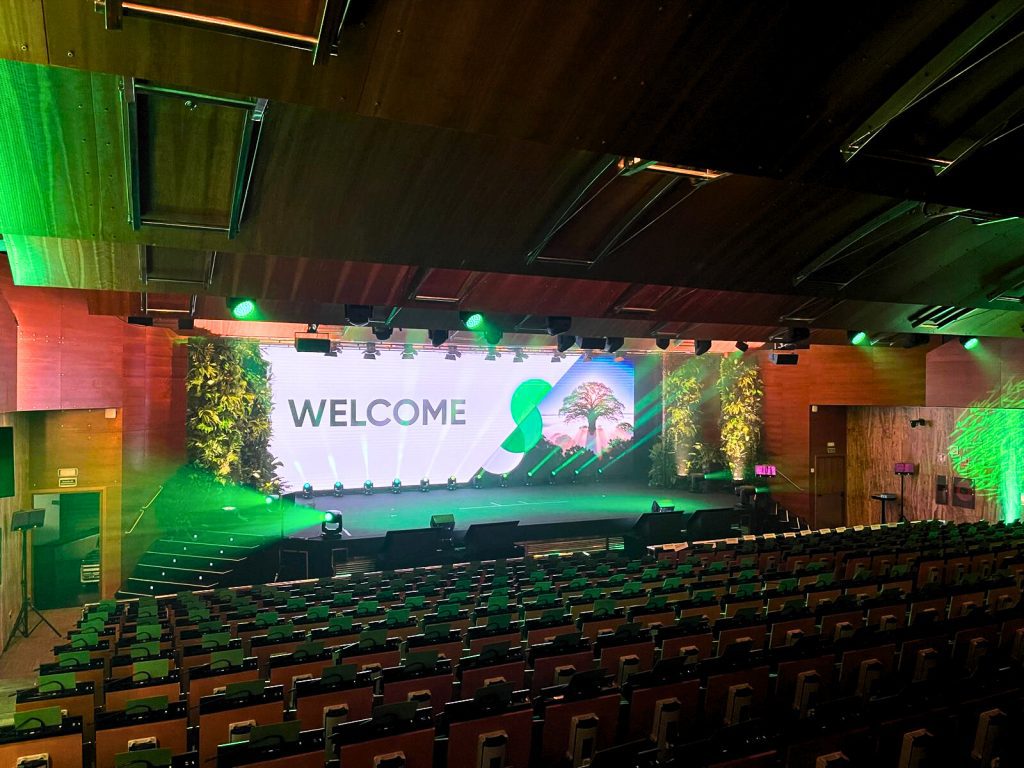
At professional trade shows, capturing the attention of attendees is one of the biggest challenges for any exhibiting company. In a single exhibition hall, dozens or even hundreds of booths compete to communicate their value proposition in just a few seconds.
In this context, LED screens have become a key tool for attracting visitors and increasing a brand’s visibility. Thanks to their brightness, dynamic content, and ability to display motion, they help booths stand out within the exhibition space and create a strong visual first impression. Below, we explore how LED screens can be used strategically to attract more traffic to your booth.
What are LED screens in trade shows?
In the context of exhibitions and trade fairs, LED screens are audiovisual surfaces made up of light-emitting diodes that allow digital content such as videos, animations, or informational messages to be displayed.
Unlike traditional graphic materials like printed panels or roll-ups, LED screens offer dynamic and adaptable content, making them highly effective at capturing attention in visually competitive environments.
Their ability to display moving images, vibrant colors, and updateable messages makes them a widely used solution in modern booth design.
Advantages of using LED screens in your booth
Integrating LED technology into a trade show booth provides several visual and communication benefits. From improving visibility within the exhibition hall to strengthening brand presence, LED screens help create a stronger impact on visitors.
1. High Visibility within the exhibition hall
One of the biggest challenges at trade shows is standing out among a large number of exhibitors. LED screens offer high brightness and sharp image quality, making the displayed content visible even from several meters away.
Additionally, animations and moving visuals naturally attract the attention of people walking through the aisles, encouraging them to approach the booth.
2. Dynamic and adaptable content
One of the main advantages of LED screens is the ability to display different types of content throughout the event. This allows exhibitors to adapt their message depending on the moment or audience.
For example, screens can be used to display:
- product videos
- brand presentations
- promotional messages
- visual demonstrations
This flexibility helps keep the content engaging and relevant throughout the entire trade show.
Greater visual impact than traditional graphics
While many booths rely on static elements such as printed panels or signage, LED screens introduce a far more engaging visual component.
Movement and animation attract more attention than static graphics, increasing the chances that visitors will stop at the booth and show interest in the brand.
A more sustainable alternative to traditional booth graphics
Another important advantage of LED screens is their contribution to more sustainable event production.
Traditional booth graphics often require printing large-format materials such as banners, panels, or vinyl graphics that are frequently discarded once the event is over. In many cases, these materials are used only for a single event and then become waste.
LED screens provide a more sustainable alternative, as the same screen can be reused across multiple events while the content can be updated digitally. Instead of producing new printed graphics for each trade show, companies can simply modify the visual content displayed on the screen.
This flexibility not only reduces material waste but also helps companies adopt more environmentally responsible practices in their event and exhibition strategies.
Applications of LED screens in trade show booths
LED screens can be used in several ways within a booth to enhance visual communication and improve the visitor experience.
1. Attracting visitors
One of the main roles of LED screens at trade shows is to capture the attention of people passing by. Short, visually engaging content can spark curiosity and encourage attendees to approach the booth.
2. Presenting products or services
Screens can display videos or animations that visually explain product features or services. This allows visitors to quickly understand what the company offers.
3. Reinforcing brand identity
LED screens can also be used to display visual content aligned with the company’s brand identity, including corporate colors, logos, or branded animations, strengthening brand presence within the exhibition space.
Technical considerations for installing LED screens
Before integrating LED screens into a booth design, it is important to consider a few technical aspects to ensure proper performance during the event.
1. Strategic placement
The screen should be positioned where it is clearly visible from the main aisles of the exhibition hall. Understanding visitor flow can help maximize its impact.
2. Appropriate size and resolution
The size and resolution of the screen should match the viewing distance to ensure the content remains clear and easy to read.
3. Electrical infrastructure
LED screens require proper electrical planning to ensure a stable power supply throughout the entire event.
LED screens have become an essential tool for standing out at trade shows and exhibitions. When used strategically, they help capture the attention of attendees, communicate messages dynamically, and strengthen brand presence within the exhibition hall. Integrating LED technology into booth design can make the difference between blending in and becoming one of the most eye-catching spaces at the event.
